
Search Tift County Property Records
Start with the Tift County qPublic portal. Use it whenever you know an address or an owner name. Search modes cover owner, location address, parcel number, and legal information. Write the parcel number down exactly as it appears, spaces and leading zeroes included. That string ties the assessment roll to the SGRC map. It also separates tracts sharing one street address. A thorough Tift County property search leans on each system. It draws on that system for the facts it actually keeps.
Remember what each product is. A parcel card serves tax administration. A map line is reference geometry. Neither one substitutes for the clerk's recorded deed, a survey, or a title opinion. Work the systems in order and note when you pulled each result.
- Search qPublic by street address and copy the ParcelNum, situs, owner label, and legal description.
- Open the SGRC map and use its QPLINK to cross-check the same parcel.
- Search the GSCCCA index by grantor, grantee, book/page, plat name, or instrument type.
- Check the Tax Commissioner's separate bill and payment route.
- Ask the custodian for an older book, image, or file that is not online.
Where Tift County Records Live
Three county offices split the duties. The clerk of superior court acts as recorder for deeds, security deeds, releases, liens, easements, covenants, and plats. Parcel identification and assessment facts belong to the Board of Tax Assessors, while the Tax Commissioner runs the bills, payments, delinquency cases, tax sales, and digest totals. Send any Tift County property records request to the office that created the record in the first place.
Tift County Clerk of Superior Court
237 East 2nd Street
Tifton, GA 31793
(229) 386-7810
Tift County Board of Tax Assessors
225 North Tift Avenue
Tifton, GA 31794
(229) 386-7840
Tift County Tax Commissioner
225 North Tift Avenue
Tifton, GA 31794
(229) 386-7820
Tift ParcelNum Is the Key
The public SGRC parcel layer labels its parcel field ParcelNum. Values look like 0017 010A, and the spaces matter. Copy the whole string rather than retyping a shortened version. Street labels change more often than parcel numbers. Still, a split, merge, or re-parceling can alter the number.
The SGRC Tift parcel service publishes ParcelNum alongside OwnerName, Situs, QPLINK, and geometry. QPLINK leads back to the matching qPublic record. That turns the map into a bridge rather than a rival assessment database.
Note: The layer's public metadata lists those fields by name.
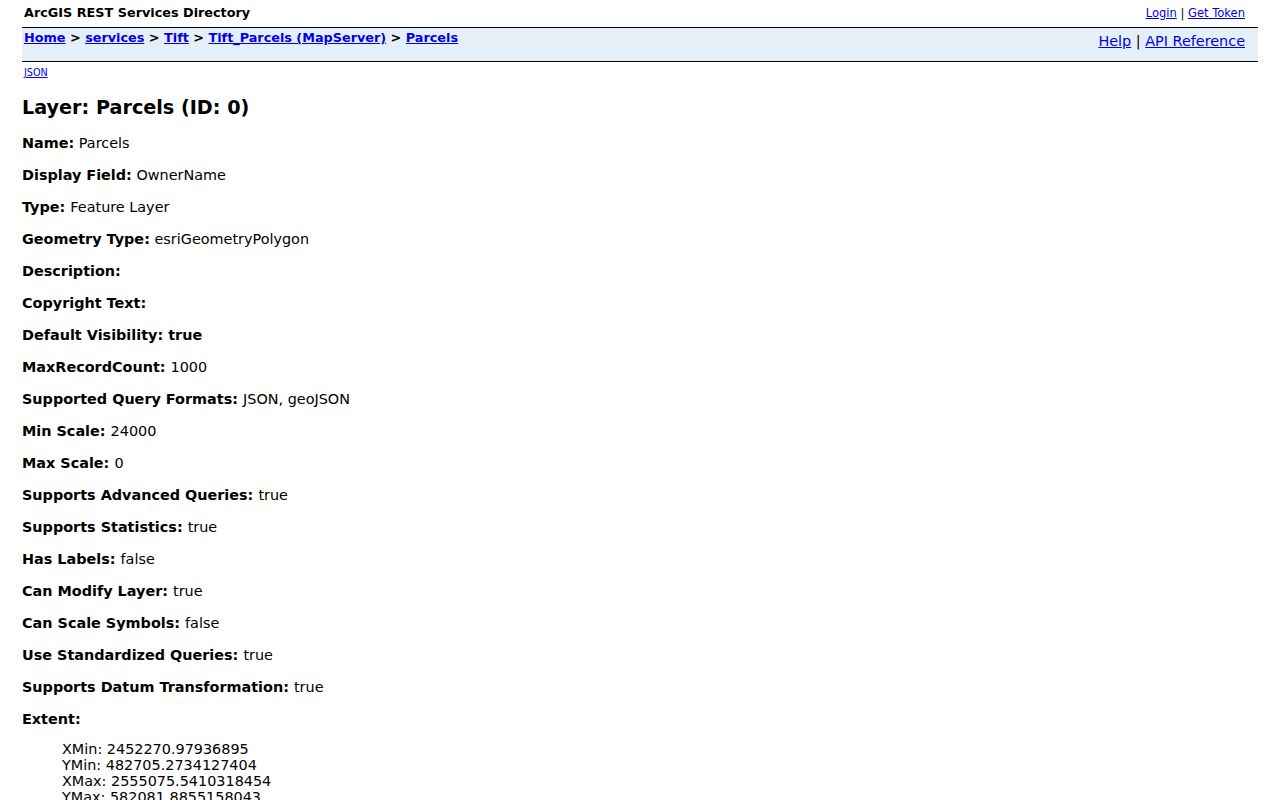
Pair the map key with the qPublic card, then carry the legal description into the deed and plat indexes kept by the clerk.
Map Tift County Parcels
The TiftCounty ArcGIS item stacks parcel geometry with boundaries, roads, zoning, land use, natural features, and utilities. It also adds school zones, census tracts, and voting layers. Identify the parcel first. Then switch on only the layers your question needs. Piling on overlays can hide the tract and blur where one boundary truly ends.
This public inventory shows that Tift County property records pair naturally with map context. Do not mistake the viewer for a legal survey.
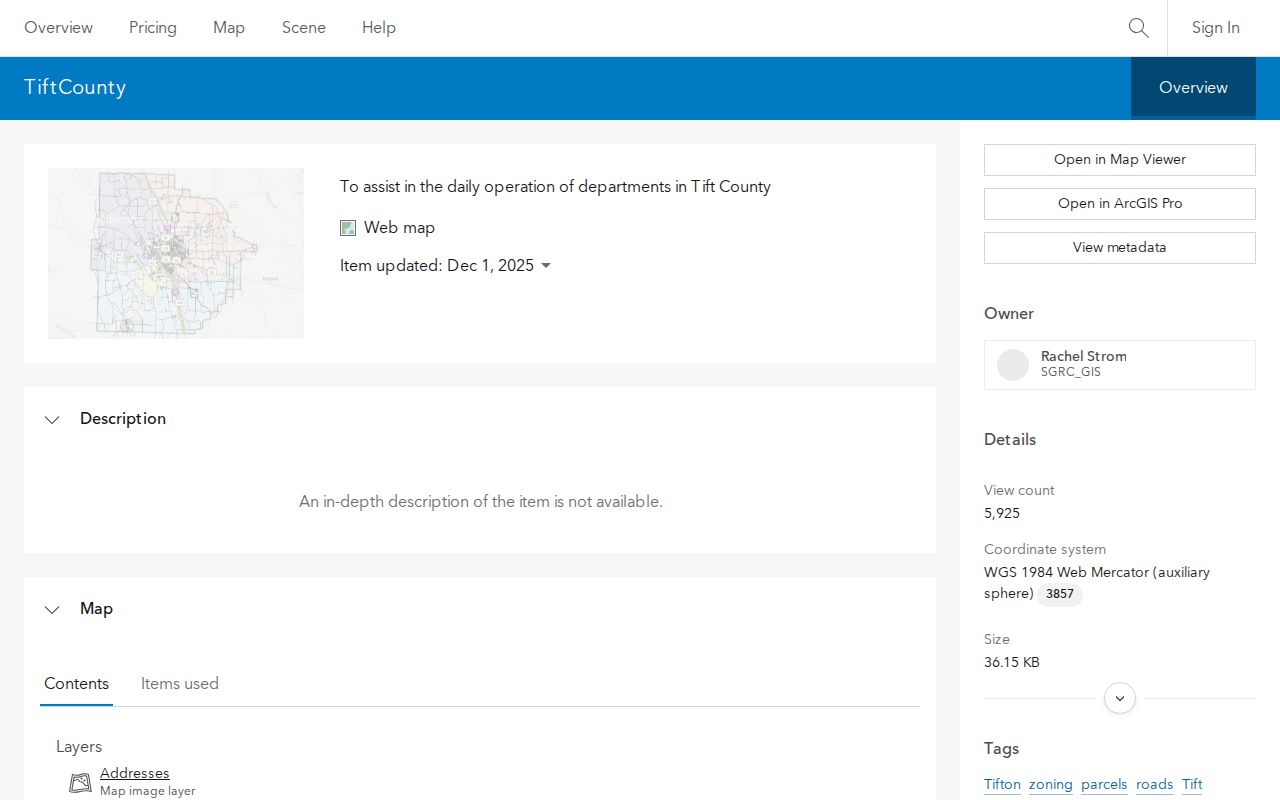
Boundary dispute? Rely on the recorded plat, the deed description, and a licensed surveyor. GIS lines stay reference lines.
Tift County Property Record Types
Every record type answers a narrow question. Recorded instruments prove transfers and claims. Assessment files drive taxation, and bills track tax-account activity. Plats and parcel maps describe location in different ways, while city permits document reviewed work. Check the source and date before concluding anything.
| Record Type | What It Documents | Kept By | Access |
|---|---|---|---|
| Deeds | Transfers, parties, dates, legal descriptions | Superior Court clerk | GSCCCA index; clerk copy |
| Security deeds and liens | Recorded claims and later releases | Superior Court clerk | GSCCCA real-estate and lien indexes |
| Assessment and tax | Value, exemptions, bill, payment status | Assessor and Tax Commissioner | qPublic, payment portal, office request |
| Plats and parcels | Lot/block references and map geometry | Clerk and SGRC | Plat Index and ArcGIS |
| Building permits | Work, review, and inspection events | City or county planning office | BS&A for Tifton; custodian request elsewhere |
Ownership disputed? Read the newest deed plus any later instruments. Value or payment disputed? Keep assessment and tax account apart. A deed may state consideration, but that figure is not an appraisal.
GSCCCA Holds Tift Deed Indexes
The GSCCCA Real Estate system opens name, book/page, property, lien, plat, PT-61, and UCC routes. Its name form can query all parties, grantors only, or grantees only. Controls cover instrument type, county, neighboring counties, and dates. Statewide guidance places all-county transactions from January 1, 1999. The form itself displays an earlier statewide date, though. Confirm Tift-specific good-from dates and image coverage live in the system.
| Field | Use | Caution |
|---|---|---|
| Party role | All, grantor, or grantee | Search both directions |
| Instrument | Deed, release, lien, easement, plat | Labels vary by transaction |
| County and dates | Narrow Tift results | Older coverage needs confirmation |
| Book/page | Retrieve a known citation | Image access can vary |
The name-search form displays the controls a searcher should record before opening any instrument.
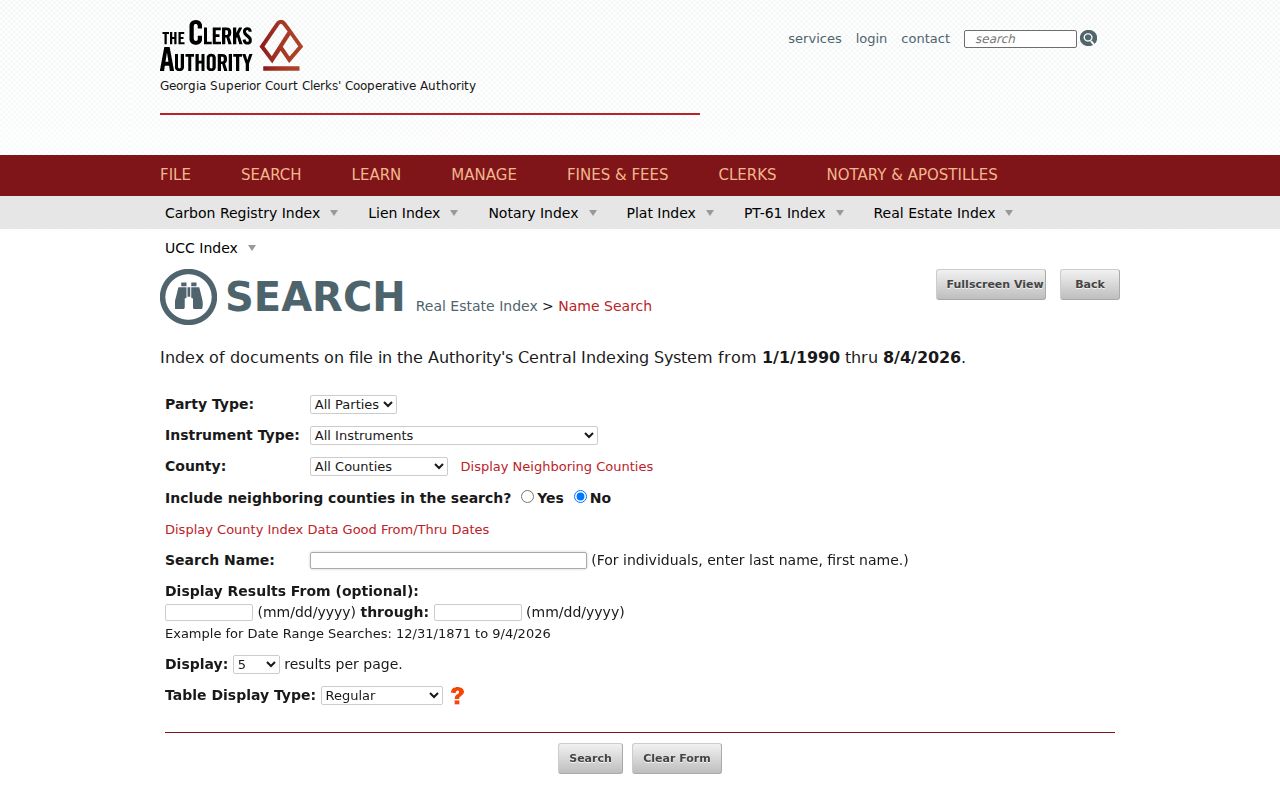
When an image is older or unavailable, call the clerk. A focused written request stating names, years, record type, and any book/page also works.
Tifton Adds Permit Records
Parcels inside Tifton carry a second, city-level trail. The Tifton BS&A portal searches building-department and other municipal records by address, name, parcel number, record number, or license number. You can search by address. A name or parcel number works too. So does a record or license number. That permit trail stays separate from county deeds and tax cards.
Note: The portal's landing screen lists the municipal categories and the search route.
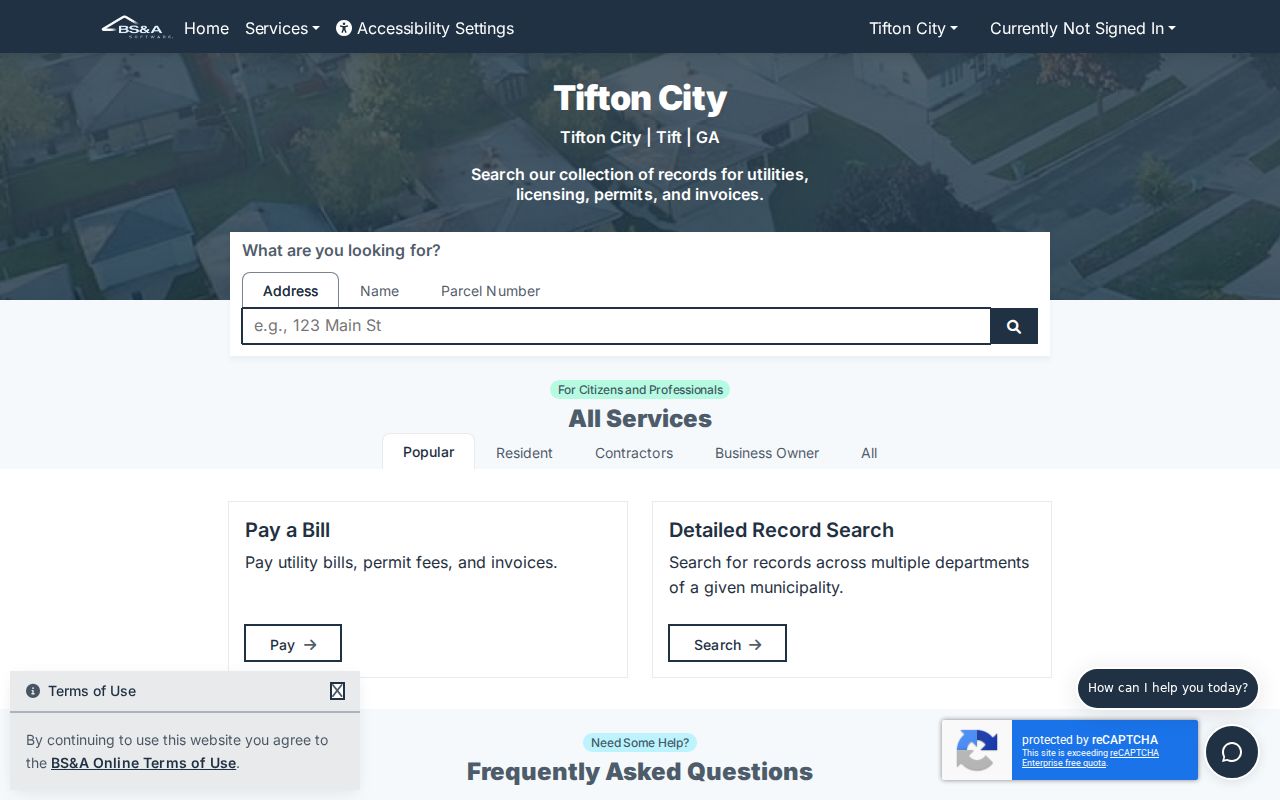
A sample 2025 permit shows work description, status, review, contractor, and inspection data. Those fields can explain changes at a site. The permit's owner or occupant line, however, is not proof of title.
Tift Records Before 1905
Tift County was formed in 1905 from land taken from Berrien, Irwin, and Worth counties. Any Tift County property records search that hits 1905 hits a wall. It has to keep going in a parent county. That jump works best when you carry the legal description with you. Land lot, district, acreage, adjoining owners, and roads should all move together. Any prior book and page reference should move with them. A stable legal description survives a county-line change. A modern street address does not do nearly as well.
The statewide digital baseline does not replace the clerk's tools. Physical indexes, deed books, a public terminal, and the Georgia Archives catalog still matter. Ask the clerk for the grantor-grantee index narrowed to a short year range. Write down every book and page cross-reference before you step back another decade. Those notes become the thread you follow through the deed records.
One modern parcel may hide several old tracts. Track each legal description separately. An address can paper over multiple conveyances, easements, or plats that merged over time. The tax parcel is a fine place to start a property search. Just do not assume it always had today's shape or county.
Historic newspapers add date clues. Georgia Historic Newspapers holds Tifton Gazette material from 1891 through 1974. Try a surname, a road, or an estate. Try a sheriff sale, tax sale, or subdivision notice too. Then read the scanned page itself, since optical character recognition mangles names and street numbers. Treat the notice as a lead. The deed, court file, probate record, or tax instrument is what confirms ownership.
Historic Maps Add Address Clues
The 1917 Tifton Sanborn set holds eight sheets of detail. Blocks, building footprints, materials, uses, utilities, and street numbers all appear. It is a strong way to tie an old address to a block. It cannot establish current ownership, though.
The collection page names the historic source and its scope.
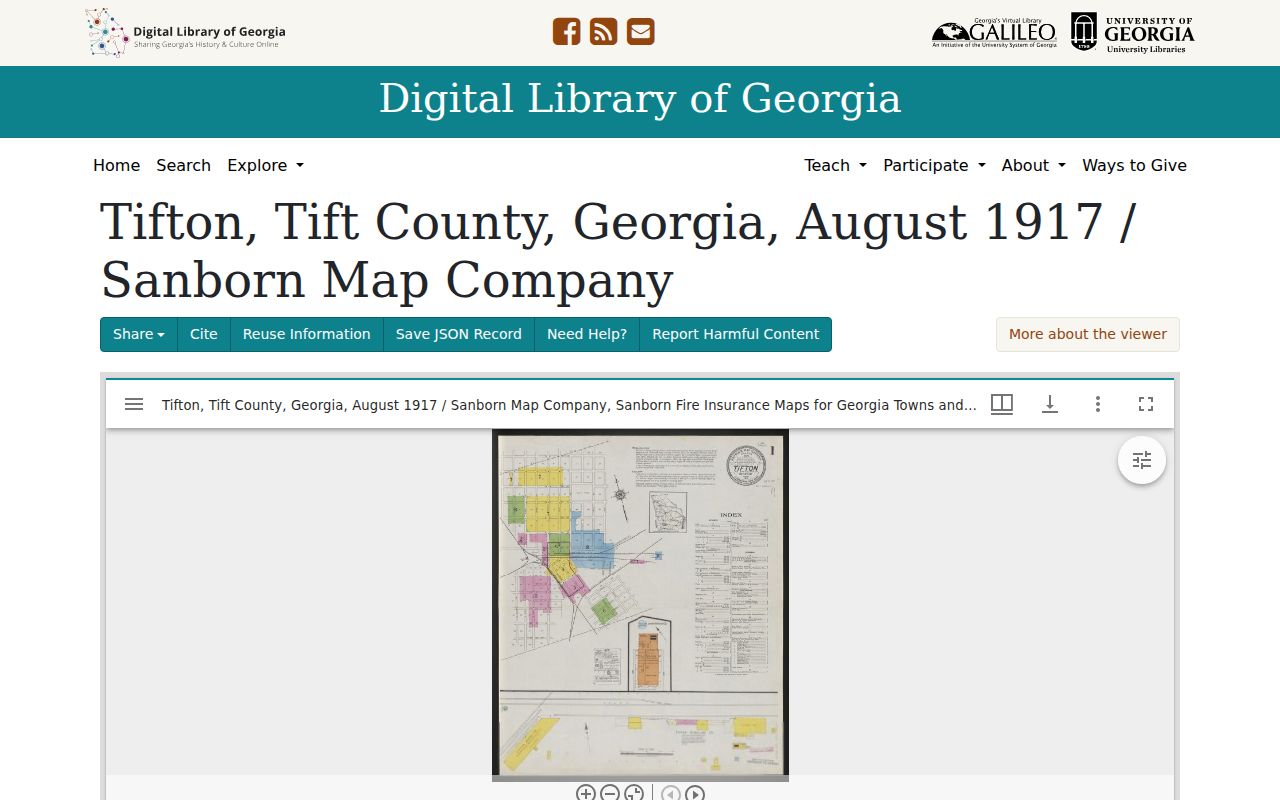
Match a Sanborn clue against the current parcel polygon and the recorded deed. Ty Ty has a 1924 Sanborn set. The county publishes no official Sanborn set for Omega, so that gap leaves the plat and deed records to carry the address history there.
Tift Tax Values Need Context
Georgia generally assesses property at 40 percent of fair market value for tax purposes. Tift's 2024 revaluation notice laid out field work, mailed notices, and a 45-day appeal window. The county's five-year digest runs through 2025, but those totals are countywide. They cannot pin a value trend on one parcel or subdivision.
Check the parcel card's year and components against the bill year. Exemptions can shift taxable value while the market-value field sits still. A deed's consideration is a third number entirely. It may be nominal, exempt, omitted, or far from an open-market price.
Offline Tift County Record Requests
Portals stall sometimes, or an older file simply is not online. That is when the Tift County records request form becomes the practical route. Georgia's Open Records Act sets the pace. The office must issue an access determination within three business days. Charges for copies, media, and staff time may apply beyond a set threshold. Prepayment can be requested before anything is produced.
Precision makes a request work. Name the custodian and the parcel number. Include the address, any owner name variants, the date range, and the exact record wanted. If the book and page citation is unknown, ask for an index entry first. A narrow request is easier to route and far less likely to pull in unrelated material.
Each office keeps its own record series. For deed material, the Superior Court clerk can speak to the public terminal and the physical grantor-grantee books. Plat books and certified copies also fall under that office. For planning questions, say whether the parcel sits inside Tifton, Omega, Ty Ty, or unincorporated Tift County. Tax material splits further still. A parcel card, an assessment notice, a tax bill, a payment record, a delinquency record, and a published tax-sale item are separate sets. Different staff sometimes hold them.
Older deed books reward the extra effort. Plats not imaged online, estate deeds, releases, easements, restrictive covenants, and boundary agreements are all worth naming as record groups. The county form spells out a ten-cent page charge. Qualified staff time is billable after the first quarter hour, plus actual media costs. An estimate arrives before fulfillment, and payment may be required before inspection or delivery. Supply the parcel number and the situs address. Add the legal description, known book and page, instrument type, and a tight date range. Those search keys help the custodian find the right file fast and help the requester gauge the cost.
Note: Confirm qPublic card and tax-payment portal details in a live session.
Tift County Privacy Boundaries
Most recorded land and tax facts are public. Public is not the same as permission to misuse a person's information. Georgia's Safe at Home program took effect July 1, 2026. It offers address substitution, mail forwarding, and protected voter registration for eligible participants. A protected address should never be reconstructed from unrelated records. It should never be shared to defeat the program.
Use the least personal data a parcel question truly needs. A mailing address on an official tax card can matter. It does not have to reveal where someone actually lives. A voter record, permit contact, or business filing proves nothing about title or occupancy. Keep each source within its lawful purpose. Verify facts with the custodian, and never publish sensitive details just because a search screen hands them over.
Limits of Tift County Records
Tift County property records carry real weight. A single parcel file can hold a deed, a tax bill, an assessment, a lien, a plat, a permit, or a mapped boundary line. Records like these answer most questions people bring to a property search. Still, they have limits worth knowing before you lean on them.
No file can promise completeness. Some interests in a parcel never reach the recorder. The owner of record on the tax roll may lag behind a closing that just finished. A line drawn on a GIS map is not the surveyed boundary, and an assessed value is not a sale appraisal. Trusts, estates, and companies can also stand in where a person's name would be.
Lawful use. Use Tift County property records for lawful research, due diligence, boundary work, and civic review. Never use owner data to stalk, harass, or harm a person.