
Tift County Deed Types
The Clerk of Superior Court is Tift County's recorder. Its GSCCCA real-estate search indexes warranty deeds, security deeds, assignments, releases, liens, easements, plats, and covenants. Identify the instrument type before deciding what it proves.
| Deed Type | What It Does | Common Use |
|---|---|---|
| Warranty deed | Conveys title with stated warranties | Ordinary sale or transfer |
| Quitclaim deed | Conveys the interest a grantor holds | Family transfer or claim cleanup |
| Deed from estate or trustee | Conveys in a fiduciary role | Estate or trust transfer |
| Sheriff or tax-sale deed | Records a forced-sale transfer | Execution, foreclosure, or tax process |
| Correction deed | Corrects an earlier instrument | Name, citation, or description issue |
A Georgia security deed secures a loan rather than passing ownership. Track any assignments and releases by citation. Later instruments change the picture.
Search Tift Deed Index Fields
The GSCCCA Name Search lets you choose grantor, grantee, or all roles, plus instrument type, county, a neighboring-county option, name, date range, result count, and display type. Start broad. Then narrow by role.
| Control | Use | Check |
|---|---|---|
| Party role | Separate transferor from recipient | Run both directions |
| Instrument | Filter deeds, releases, notices, and liens | Do not omit unusual transfers |
| County | Choose Tift and, when needed, neighbors | Omega and older tracts can cross boundaries |
| Date | Move newest to oldest | Confirm recording date |
The captured form below shows those official controls.
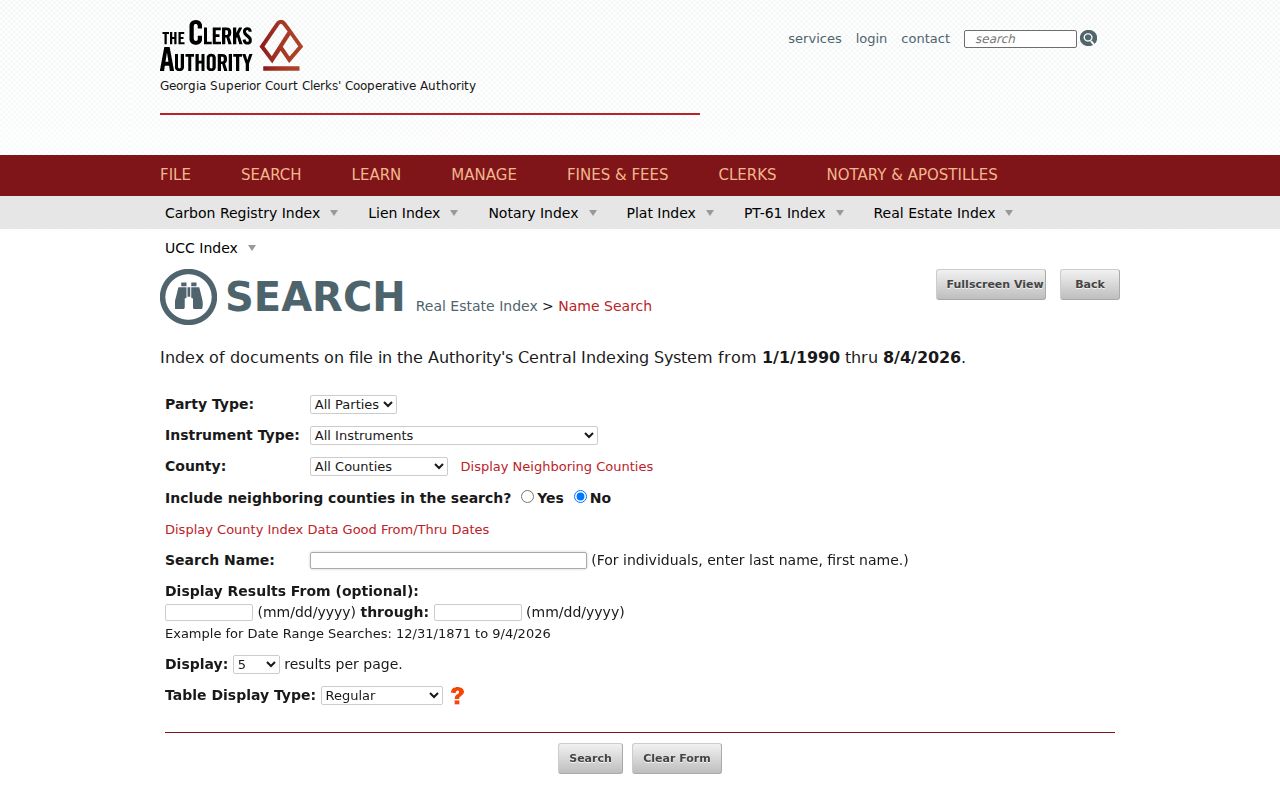
Try every spelling variant, and log the role and date.
Find Tift Books and Plats
A known book and page leads straight to a recorded instrument. The index row alone tells little. The deed image carries the legal description, signatures, exhibits, consideration language, and cross-references that indexes omit. When no image is online, the clerk can supply a copy from the citation.
The GSCCCA Plat Index searches name, county, district, land lot, and date. It reaches plats. Subdivision, lot, and block clues then tie to a recorded survey. The plat carries its own clerk citation.
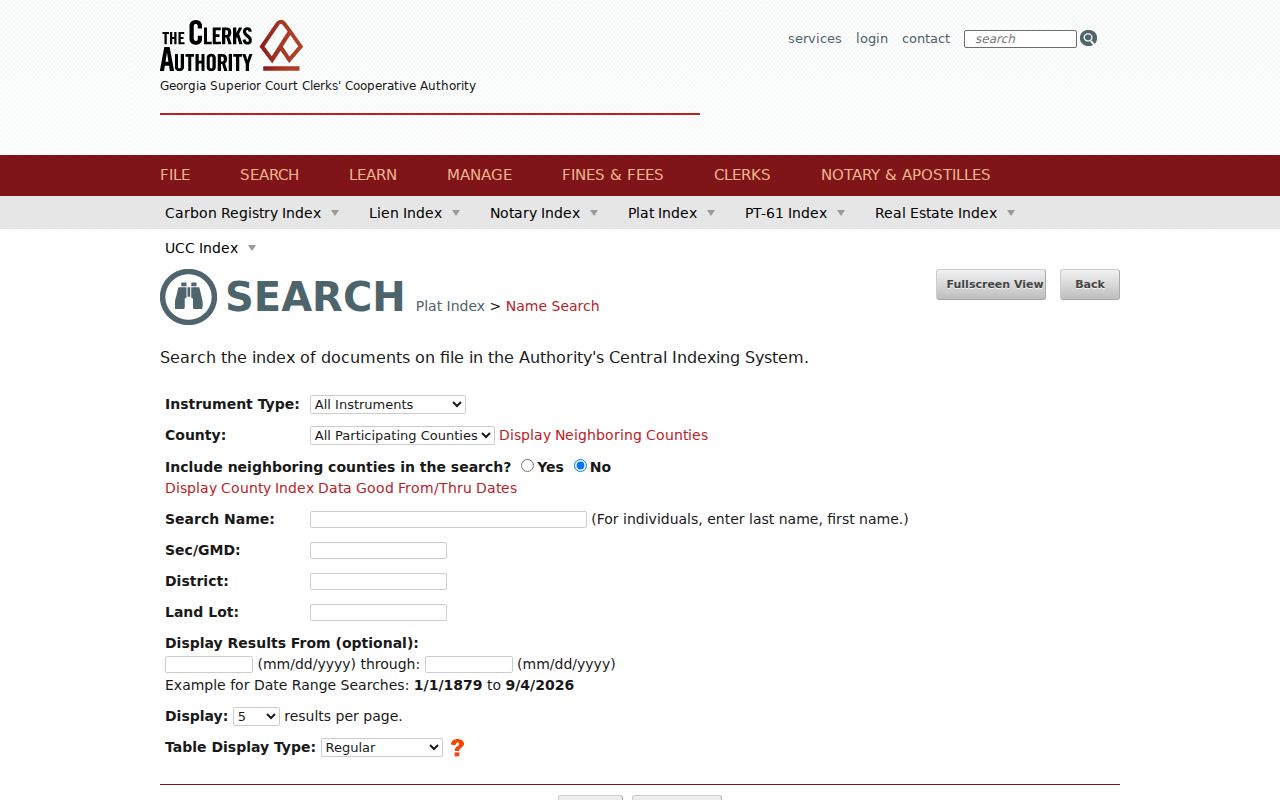
Planning approval is not recording. A recorded final plat from the clerk is the document that carries survey detail and a book and page citation.
Tift's Online Date Boundary
GSCCCA describes all-county transactions from January 1, 1999, with older records still being added, and the name form shows a statewide start of January 1, 1990. Neither date settles Tift's coverage. Check the county good-through display before trusting an image range. Then ask the clerk.
Older deed route. When the screen ends, use the clerk's public terminal, year indexes, deed books, and any verified microfilm.
Exact image coverage for Tift County is the clerk's call. Wait for the custodian to confirm any copy fee before quoting a figure.
Deeds Before Tift's 1905 Start
Tift County dates to 1905. It was formed from Berrien, Irwin, and Worth. Older deeds may sit in a parent county's books, so carry land lot, district, acreage, road, adjoining owners, and prior recording references into the next index.
A street address is weak for early land. The legal description survives a county-name change and should guide the handoff.
Read Releases With Tift Deeds
Search the instrument types the question calls for: SECURITY DEED, ASSIGNMENT, RELEASE, MATERIALMANSLIEN, EASEMENT, NOTICE, COURT ORDER, and boundary-line deeds. Search both sides of each deal. Owner, debtor, lender, and secured party each deserve a pass, and the image matters because indexes skip exhibits and detailed property terms.
Match releases by citation and legal description. Similar names invite false matches. Nearby parcels make it worse, and a UCC filing or court entry stays separate until the actual record ties it to the land.
Estate Transfers in Tift Records
An estate can break a clean chain. Search the decedent, the estate, executor, administrator, trustee, and beneficiary name variants. Probate papers can show authority. The recorded executor, administrator, estate, or trustee deed is the document that transfers the land, and a death certificate proves death, not authority.
Match the parcel by legal description, not surname. Search liens, tax records, releases, and court orders around the transfer date. Then compare the newest conveyance with the assessor's current owner label. Update lag happens.
Tift Deed Search Fallbacks
The clerk's Record Room and its public terminal are the first fallback when a GSCCCA result or image falls short. Ask for a grantor-grantee index by year span. Bring every clue you have. That means book and page, instrument number, subdivision, lot, land lot, district, or party role, and a narrow request beats asking for every record tied to one address.
Georgia Archives offers local-records research guidance and a County Records Microfilm Index. Confirm holdings before citing them. Genealogy material points to clerk-room deeds from 1905. Fees and access come from the clerk.
Recorded Price Is Not Value
A deed or PT-61 may state consideration, but the figure can be nominal, exempt, omitted, or unrelated to an open-market sale. Keep the exact wording and date. A price entry is not an appraisal.
For value questions, compare the assessment-year qPublic fields, the tax account, and a properly supported appraisal or market analysis. The deed page has a narrower job. It identifies the instrument, the parties, the legal description, and the place in the chain.
Historic Tift Deed Clues
The 1917 Tifton Sanborn set spans eight sheets. Its sheets show historic blocks, street numbers, building footprints, uses, and utilities, and they can help correlate an old address with a deed description. They cannot prove ownership.
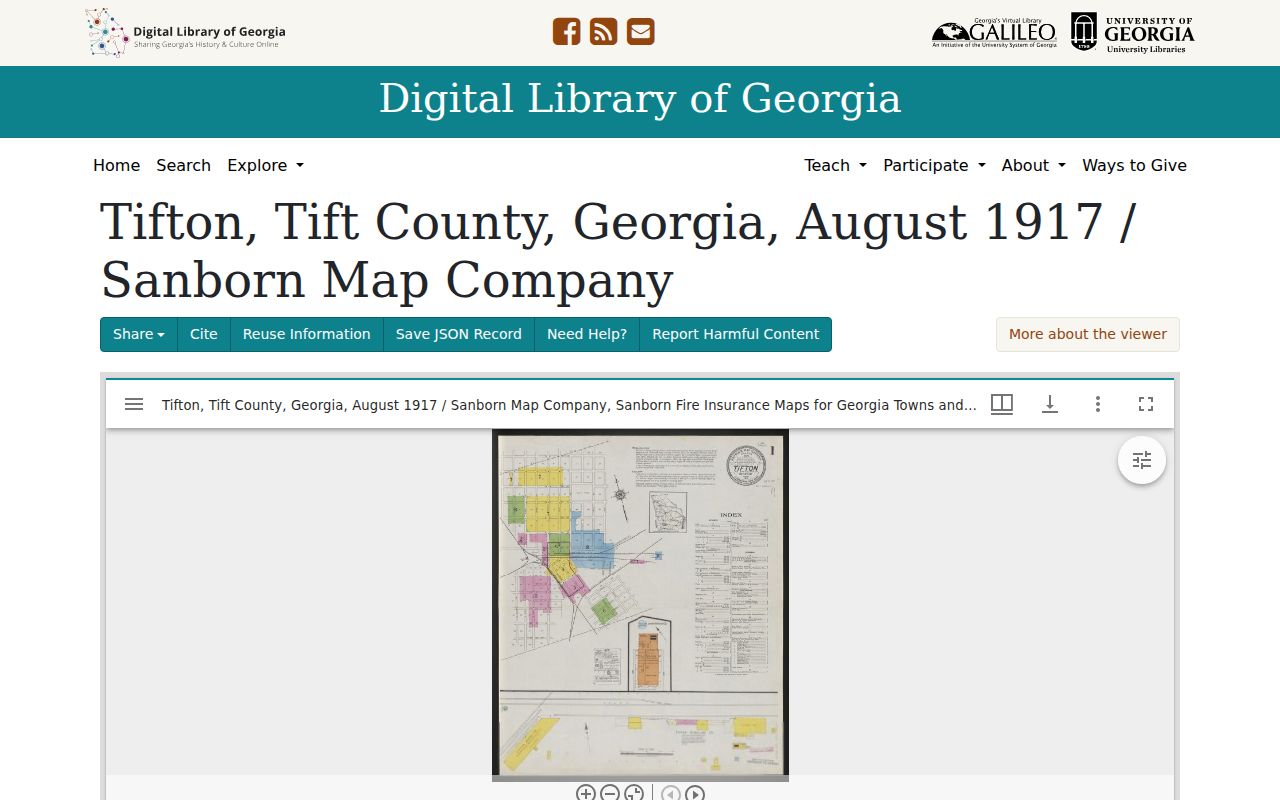
Ty Ty keeps a 1924 Sanborn set, and a 1938 county map adds helpful road context. Confirm every correlation against a Tift County deed or plat before you rely on it.
Build a Tift Deed Chain
A chain of title lists each recorded transfer for one parcel in order, from the current owner of record back through time. Start with the newest solid citation you have.
- Find the current owner's acquisition deed with that owner as grantee.
- Read the grantor, citation, date, type, and legal description.
- Search that grantor as grantee to locate the prior acquisition.
- Repeat while matching the land, then switch to clerk books when needed.
- Grantor
- The party conveying the stated interest.
- Grantee
- The party receiving that interest.
- Chain of title
- The ordered record of transfers for the same land.
- Book/page or instrument number
- The clerk's citation for a recorded document.
Request a Tift Deed Copy
Start from an index image if one exists. Otherwise, request the recorded instrument straight from the Tift County Clerk of Superior Court. The county request form covers gaps such as missing images and older deed books. It also handles plat exhibits or clerk-held files. Under Georgia guidance, the office must make an access determination within three business days. Copy fees, media costs, staff time, or prepayment may apply.
Say exactly what you need: an index entry, a plain copy, or a certified copy. Give names, a year range, the instrument type, a legal description clue, and the citation. Ask about current costs before you order.
Recorded, not guaranteed. Tift County deed records show filed instruments, not a title opinion or a promise that no unrecorded interest exists.