
Run a Tift County Property Search
The Tift qPublic search is the main property-first entry point for the county. Use an address when the owner is unknown. An owner name finds parcels sharing one tax label. ParcelNum works best when an exact key is in hand. The legal-information mode helps when a deed or plat supplies a subdivision, lot, block, land lot, or district. It also works in place of a street address.
- Enter the situs address in qPublic and try road-name abbreviations when the first search fails.
- Open the parcel card and copy the owner label, ParcelNum, legal description, value year, and sale reference.
- Open the SGRC parcel map, confirm the shape and location, and use QPLINK to cross-check qPublic.
- Carry names and deed clues into GSCCCA, searching both grantor and grantee roles.
- Check the Tax Commissioner and any city permit office as separate custodians.
A recent sale can reach the deed index before the tax roll refreshes. Record both dates rather than forcing conflicting entries into one answer.
Tift qPublic Search Fields
The direct Tift County parcel application offers four search modes. Exact controls and result cards vary, so match what the page itself displays during use.
| Mode | Input | Best use |
|---|---|---|
| Owner Name | Person, trust, estate, or company variant | Find parcels under a tax-owner label |
| Location Address | Street number and name | Start from a known site |
| Parcel Number | Exact APN, including spaces | Match one administrative parcel |
| Legal Information | Subdivision or legal terms | Bridge deed and plat clues |
Owner punctuation, initials, LLC endings, and estate labels can all change a match. Try variants. Search a few careful spellings before assuming no Tift County record exists.
Keep Tift ParcelNum Spacing
The SGRC data labels its key ParcelNum. The format matters. Public examples like 0017 010A carry two spaces, leading zeroes, and a letter suffix. Preserve that spacing in notes. Parcel numbers can change after a split, merge, or re-parceling, so keep predecessor and successor clues when the map or card shows them.
The public parcel layer publishes ParcelNum, OwnerName, Situs, QPLINK, and geometry.
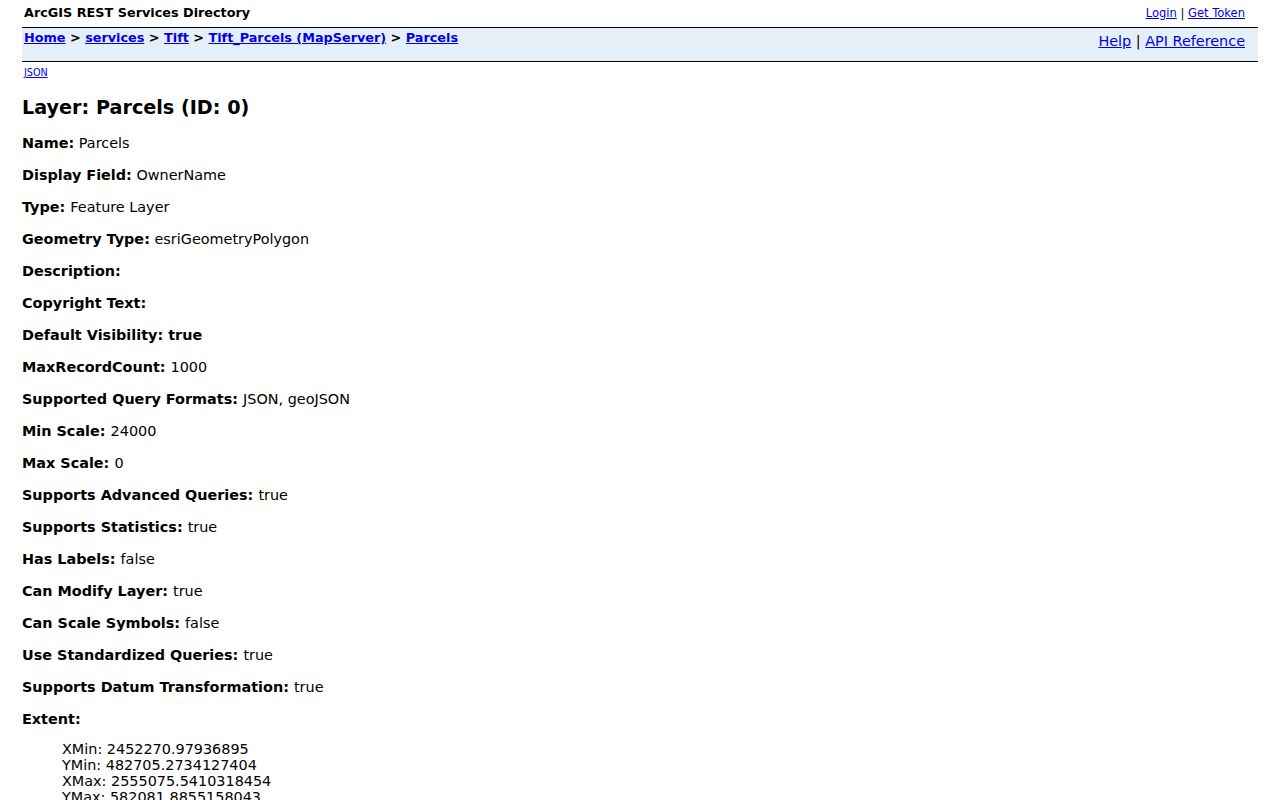
QPLINK leads straight back to the assessor card. It does not turn GIS data into a title or assessment record.
Read a Tift Property Result
Keep the label, value, year, and source for each field. Mailing and situs addresses must stay separate. The tax owner can lag a just-recorded transfer, and a last-sale field may sit blank or stale.
| Owner of record | Tax-roll name, which may be a person, joint owners, estate, trust, or company |
|---|---|
| Situs and mailing | Physical site versus the address used for tax mail |
| Parcel number | Administrative key shared by qPublic and SGRC |
| Value and exemptions | Assessment-year land, building, total, and tax treatment |
| Legal description | Lot, block, subdivision, land-lot, or tract clue |
| Last sale | Date, consideration, and recording reference when populated |
A sketch is not a survey. A last-sale amount is not an appraisal, so confirm ownership through the newest recorded instrument and any later release, court order, or tax-sale document.
Move From Parcel to Tift Deeds
The GSCCCA Real Estate Name Search accepts party role, instrument type, county, a neighboring-county option, name, dates, result count, and display type. Search all parties first. Then run grantee for an acquisition. Follow with grantor to catch a later transfer.
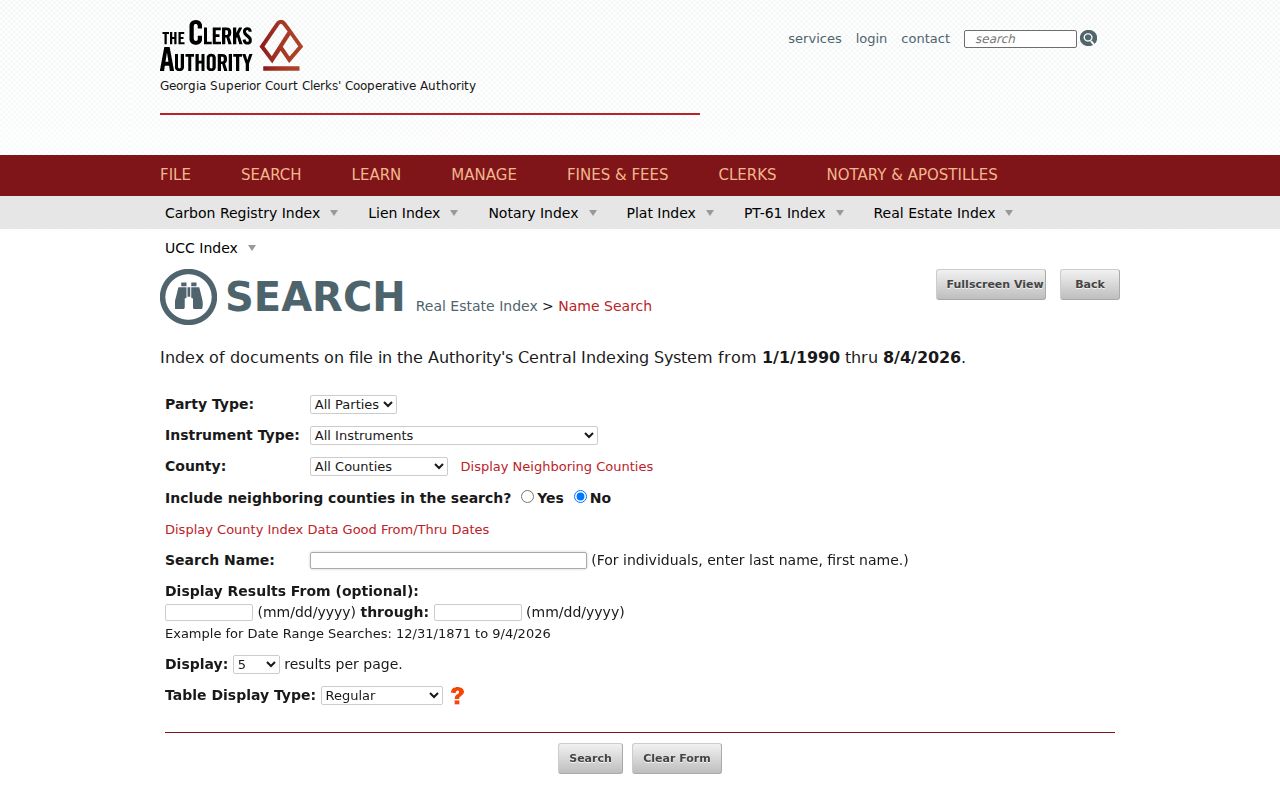
The dates conflict. Statewide guidance describes transaction coverage from 1999, while the form displays a 1990 statewide date, so confirm Tift's good-from date and image access before relying on either.
Separate Situs From Mailing
A situs address locates the land. A mailing address tells where tax notices go. Owners may use a post office box. An owner can also list an out-of-county address, and a tract may carry a Tifton mailing name while lying outside the city limit. Never substitute one field for the other. When an address fails, try RD and ROAD, HWY and HIGHWAY, directional variants, a range, or the legal description. Verify a ZIP one full address at a time through USPS, since ZIP lines do not establish city jurisdiction.
Cross-Check the SGRC Map
The SGRC Map Viewer adds location and nearby context. Its layer inventory covers parcels, municipal boundaries, zoning, land use, natural features, roads, utilities, schools, census areas, and voting geography. Select the subject parcel first. Compare ParcelNum and Situs before reading any overlay.
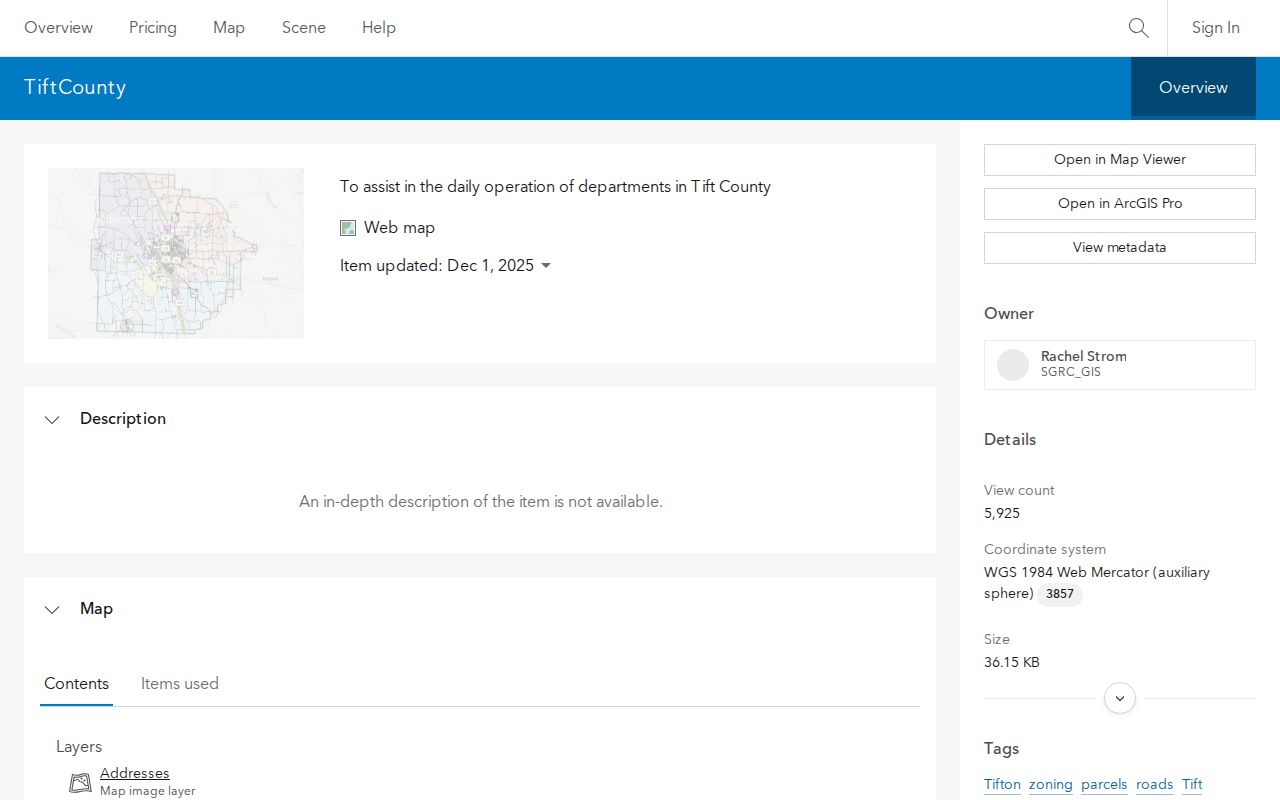
A mapped layer is only a guide. Confirm city-limit or zoning questions with the responsible planning office when a formal determination matters.
Search Tifton Permit Records
For an address inside Tifton, the BS&A municipal portal searches All Records, Business Licensing, Building Department, and other city categories. Lookups run by address, name, parcel number, record number, or license number. Address controls include a street-number range. It differs from county assessment and deed systems.
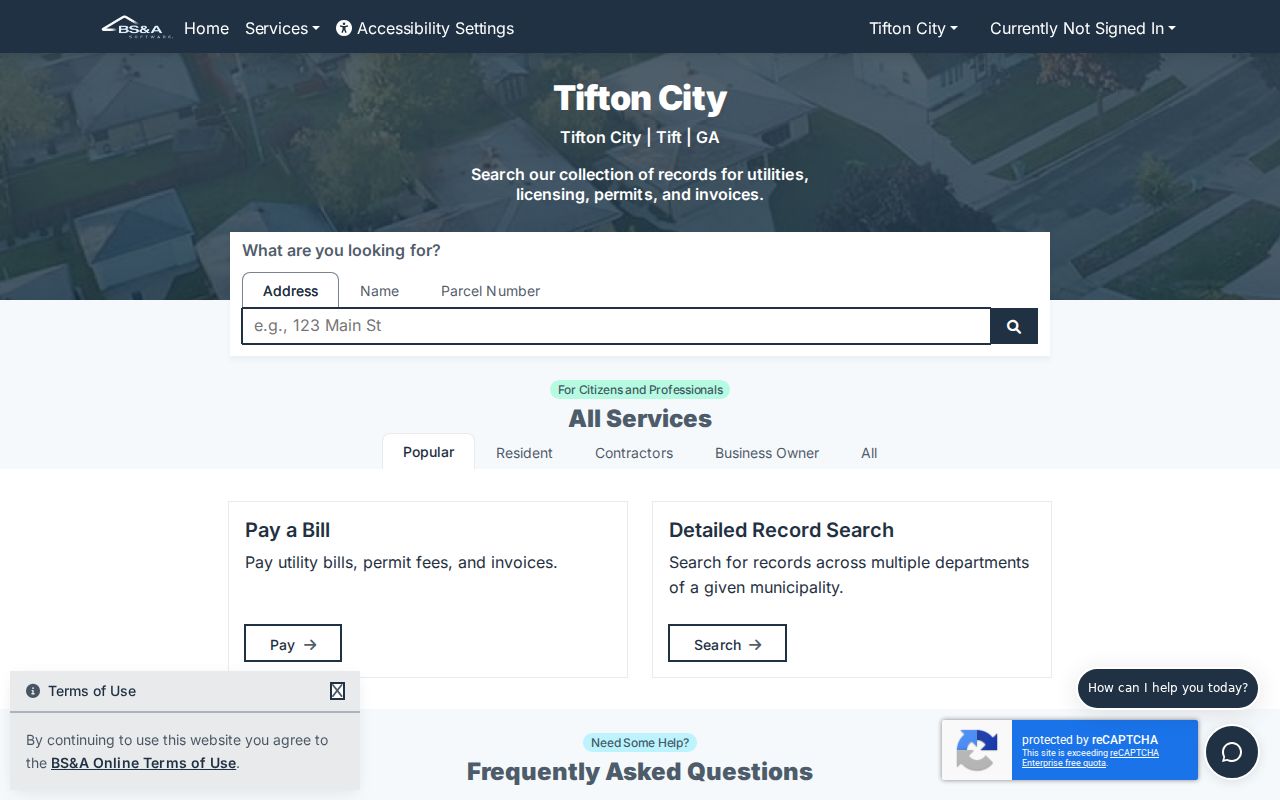
The permit fields run deep. Permit P25-3862 shows fields for work, status, dates, owner or occupant, contractor, zoning review, and inspection, yet a permit identity field is not recorded title.
Use Offline Tift Search Routes
Portals miss plenty of books, images, tax bills, and planning files. Ask the Superior Court clerk for an older grantor-grantee index or a recorded copy. The Tax Commissioner handles tax bills. Planning files need a formal request. Give the full address, parcel number, record type, and date range.
The county open-records form is the documented fallback. An access determination is normally due within three business days. Lawful page, media, staff-time, or prepayment costs may apply.
Tift Tax Results Stay Separate
The Tax Commissioner's GovernmentWindow service answers bill and payment questions. qPublic answers assessment and parcel questions. Start with the system that fits your question. The online tax form does not always load. Contact the office with the parcel number and tax year rather than guessing from an assessor value.
A county digest is not a parcel bill. Tift's published five-year history through 2025 reports aggregate values and taxes. That context is useful but broad. It cannot show whether one parcel is paid, delinquent, exempt, or headed to sale. A tax-sale notice alone does not prove that ownership changed. Confirm the newest deed, the redemption status, and the current tax account.
Search Names With Tift Variants
Owner names change shape across systems. qPublic may use joint-owner punctuation. It may show an estate label, a trust name, or an LLC suffix. GSCCCA expects individuals in last-name, first-name order and separates grantor from grantee. GIS OwnerName spacing or punctuation can differ from the tax card. None of this means an error.
Write down the exact label from each source. Then test initials. Try full first names, punctuation-free business names, estate or trustee wording, and common abbreviations. Resemblance alone is not a match. Use the parcel number, legal description, date, and instrument role to confirm the match.
Record the Tift Retrieval Date
A parcel card can update on one day. A map service, deed index, tax account, and permit record can update on others. Save the date and source with every key field. When a new deed conflicts with an older tax-owner label, report both dated facts. Seek the newest recorded instrument rather than silently choosing one.
The habit also speeds later checks. It shows whether a difference reflects a true record change. It could also be a portal refresh delay, or an error in the original note.
Define Tift Search Terms
These terms prevent common mix-ups between map, tax, and deed results.
- Parcel or APN
- The assessor's administrative identifier for a mapped tax parcel.
- Situs address
- The physical location assigned to the property.
- Owner of record
- The owner label in a given official record at its stated date.
- Grantor and grantee
- The party transferring an interest and the party receiving it.
The same name recurs in different roles and years. Keep the role, date, instrument, and parcel clue with every note.
Choose a Tift Search Key
Each key has a clear strength. A careful property records search often begins with one key and uses the others to test the match.
| Search Key | Best For | Where It Works | Watch Out |
|---|---|---|---|
| Address | Finding a site when ownership is unknown | qPublic, GIS, Tifton BS&A | Renamed roads, rural situs, multiple parcels |
| Owner name | Finding parcels under one tax label | qPublic and GSCCCA | Initials, punctuation, trusts, estates, companies |
| Parcel number | Matching one administrative tract | qPublic, SGRC, permits and tax references | Spaces, leading zeroes, splits and merges |
Not a title search. A Tift County property search organizes public clues but does not guarantee clear title, surveyed lines, or the absence of unrecorded rights.